My writing emerges at the intersection of research, practice, and grounded engagement. Whether shaped by long-term fieldwork, collaborative academic projects, or real-time responses to crises, each piece reflects a commitment to documenting lived experiences, challenging systemic exclusions, and co-producing knowledge with communities. From academic publications on urban planning and governance to practice-based essays on disability, housing, and everyday resilience, my work is informed by both analytical rigour and a deep respect for grassroots knowledge.
This page brings together selected writings across formats, peer-reviewed chapters, reflective essays, and public commentary that collectively trace my evolving engagement with questions of equity, inclusion, and justice in urban India.
Academic Writing
Politics of Participation in Urban Planning: The “Democratic Moment” of the Mumbai Development Plan 2014–2034
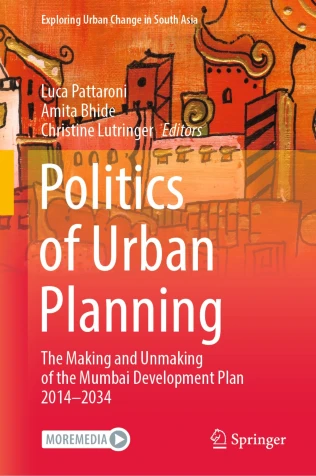
Type: Co-authored Book Chapter
Year: 2022
Authors: R. Bhardwaj & L. Pattaroni
Read/ Access: Politics of Participation
As the lead author of this chapter, I explored the contentious and evolving terrain of participatory planning in Mumbai through the lens of what we call a “democratic moment.” Drawing on the unfolding process of the Mumbai Development Plan (MDP) 2014–2034, this chapter examines how a unique and temporary alignment of actors-grassroots movements, planning professionals, civil society organizations, and concerned citizens, transformed planning from a technocratic exercise into a space of open, critical, and politicized engagement.
This participatory surge was not confined to formal consultations. It unfolded across multiple sites: in community workshops, public hearings, counter-mapping exercises, and locally generated development plans. These practices challenged the limited and often exclusionary norms of expert-driven planning, creating a dynamic interplay of different knowledges-situated, technical, ecological, and political, that redefined the terms of debate around urban futures.
Yet, this “democratic moment” was not enduring. The chapter also reflects on the closure of this space, as participatory openings were gradually subsumed under neoliberal modes of governance and policy rationality, what we describe as the “(neo)liberal entrapment of participation.”
This chapter is part of the same India–Switzerland research collaboration that shaped the broader volume- Politics of Urban Planning: The Making and Unmaking of the Mumbai Development Plan 2014-2034 , a unique project that brought together PhD researchers and faculty mentors from Tata Institute of Social Sciences and EPFL, Lausanne.
→ Read more about the project and my reflections on the research process
Mumbai Development Plan 2034–2014: Unfolding Controversies, Actors and Arenas
Type: Co-authored Book Chapter
Year: 2022
Authors: T. Baitsch, R. Bhardwaj, & S. Houllier
Read/ Access: Unfolding Controversies, Actors and Arenas
This chapter critically examines the complex and fragmented process behind the making and unmaking of the Mumbai Development Plan 2014-2034. Far from being a singular event, the controversy surrounding the Plan emerged across multiple years, through a series of smaller conflicts, negotiations, and public events. Each of these moments involved different sets of actors, government bodies, civil society groups, technical experts, and citizens operating within distinct arenas of engagement.
The chapter maps these actors and their interactions over time, laying the groundwork for a deeper understanding of the political dimensions of urban planning in Mumbai. By tracing the shifting arenas of contestation and the alliances that formed and dissolved along the way, the chapter situates the Development Plan within the broader politics of planning and governance in contemporary Indian cities.
This chapter is part of the same India–Switzerland research collaboration that shaped the broader volume- Politics of Urban Planning: The Making and Unmaking of the Mumbai Development Plan 2014-2034 , a unique project that brought together PhD researchers and faculty mentors from Tata Institute of Social Sciences and EPFL, Lausanne.
Revisiting Praxis as a Model for Field Education in Social Work
Type: Co-authored Book Chapter
Year: 2022
Authors: F. Reheem, S. Varghese, & R. Bhardwaj
Read/ Access: Revisiting Praxis as a Model For Field Education in Social Work
This chapter revisits and reasserts the importance of praxis understood as reflective, ethical, and collaborative action as a foundational model for social work field education in the Indian context. Framed against the backdrop of the COVID-19 pandemic and its disproportionate impact on vulnerable communities, the chapter critiques dominant technocratic and managerial models of field practice. Instead, it advocates for a pedagogy rooted in emancipatory social work traditions.
Drawing on theoretical insights and field-based experiences, including case illustrations from tribal communities in Kerala and grassroots responses in Mumbai, the chapter demonstrates how a praxis-oriented model cultivates critical reflection, fosters participatory action, and equips students to respond to complex, rapidly evolving social realities. It argues for the integration of reflexivity, collaboration, and contextual sensitivity as pedagogical principles in shaping the next generation of socially conscious practitioners.
The chapter makes a compelling case for reimagining field education not just as technical training, but as a deeply political and ethical engagement with social structures and power.
Practice-Based Writing
Breaking Barriers: Creating Oneness and Sense of Belonging during COVID-19
Published On: The Blogurk, May 14, 2020
Read the Article: Breaking Barriers
Location/ Context: COVID-19 Lockdown, Machimar Nagar, Mumbai
During the early months of India’s COVID-19 lockdown, I was working in Mumbai as a Research Associate with the Centre for Urban Policy and Governance, School of Habitat Studies, Tata Institute of Social Sciences (TISS). As the crisis unfolded, faculty from the Centre initiated the TISS COVID-19 Response Team and called for volunteers to help understand and respond to the evolving situation on the ground. Drawing on my experience of working with diverse communities, networks, and civil society organizations, I joined the initial outreach efforts, largely conducted through phone calls due to movement restrictions.
One of the early insights from the field was the emergence of local practices of care, solidarity, and resilience- stories that were often invisible in mainstream narratives. Working closely with faculty and other volunteers, I contributed to an initiative that aimed to document and amplify these community-led responses.
This particular story highlights the remarkable work of Kailash Tandel, a visually challenged PhD scholar from IIT Bombay, who organized food and resource distribution in his fishing community, Machimar Nagar, during the height of the lockdown. His efforts not only addressed urgent needs but also foregrounded the specific vulnerabilities of persons with disabilities (PWDs) in times of crisis. Kailash questioned the absence of disability-specific protocols in COVID-19 planning and called for the active inclusion of the voices of the disabled in shaping responses. His work stands as both an act of solidarity and a call for structural change, reminding us that real inclusion goes beyond empathy; it requires listening, valuing lived experience, and co-creating solutions.
Micro Dynamics within Macro Planning Process: A Case of Sunderbaug
Published On: The Blogurk, August 17, 2016
Read the Article: A Case of Sunderbaug
Location/ Contest: Revision of Development Plan, Mumbai
This piece was born out of my fieldwork during the collaborative research project between EPFL (Lausanne) and TISS (Mumbai), which critically examined the politics of the Mumbai Development Plan (DP) 2014–2034. While speaking with a community leader in Sunderbaug, a settlement at the margins of the city, I was struck by the clarity and rigour with which he resisted exclusionary planning policies. His grounded, evidence-based strategies to assert the community’s right to remain in the city left a lasting impression on me.
At the time, the revision of the Mumbai DP was actively underway, and my mentor and I felt that bringing such stories to light was crucial. This writing aimed to amplify the micro-level resistance unfolding within a larger, opaque macro-planning process. It was also an effort to contribute to a growing rights-based discourse on inclusive planning, one that acknowledged the agency and knowledge of communities long treated as objects of policy rather than participants in shaping it.
This short reflection stands as both a record of that moment and a tribute to the everyday planning practitioners found in informal settlements: residents who defend their neighbourhoods with tools of data, law, and persistence.
→ Learn more about the EPFL–TISS collaborative research project
People’s Resistance & Struggles Against Water Privatization in Mumbai
Published On: Ritimo, June 12, 2013
Read/ Access: People’s Resistance Against Water Privatization
Location/ Context: Struggles against Water Privatization, Mumbai
In 2011–2012, while setting up the national desk for YUVA in Delhi, I worked from the office of Intercultural Resources (ICR), a dynamic, intellectually charged space that brought together activists, development professionals, and researchers engaged in diverse struggles across the country. During this time, George from ICR invited me to contribute a case study on urban struggles for an international publication project on people’s movements around energy and urban justice.
I chose to document the story of Pani Haq Samiti (PHS), a grassroots campaign fighting against the privatization of water in Mumbai and advocating for the right to water for all, especially the city’s informal settlements. I had worked closely with colleagues at YUVA who were co-leading this movement, and I witnessed firsthand the depth, resilience, and innovation of this community-led struggle.
This case study offers a snapshot of that moment in the campaign’s journey—its resistance to corporate-driven water reforms, its efforts to build coalitions, and its insistence on water as a fundamental right, not a commodity. Over a decade later, PHS continues to be a pathbreaking force in urban water justice. I’ve remained closely connected to their work, offering professional support when needed, and deeply valuing the lessons they offer on participatory resistance and democratic urbanism.
To learn more about Pani Haq Samiti’s ongoing work, visit: panihaqsamiti.org
Reflections
Rock Garden: What it teaches us about urban design, sustainability, imagination
Published On: The Tribune, August 5, 2025
Read/ Access: Rock Garden: What it teaches us about urban design, sustainability, imagination
Location/ Context: Chandigarh, Urban planning, Modern Heritage, Sustainability
In this article, I reflect on Mr. Nek Chand’s Rock Garden as more than just a tourist site. I read it as a counterpoint to Chandigarh’s modernist planning legacy and as a powerful example of sustainable, imaginative reuse of construction waste. Drawing on recent protests following the partial demolition of the garden’s wall, this piece reflects on what the Rock Garden continues to teach us about design, public memory, and urban futures.
Read the full original blog version under Reflections: Heritage, Waste, and Imagination: Re-reading the Rock Garden