RC21 International Conference: Ordinary Cities in Exceptional Times
Athens, Greece | 24–26 August 2022
Role: Co-Presenter (Panel 22 – Neighbourhood Residents in Vulnerable Circumstances: Crisis, Stress and Coping Mechanism)
Paper: Coping and Emotional Trajectories in an Unequal City: Gendered Insights from the Pandemic in Mumbai
(Co-authored with Suchismita Chatterjee)
In August 2022, I co-presented a research paper at the RC21 International Conference held in Athens, Greece, an academic gathering focused on exploring how cities responded to the exceptional conditions brought on by the COVID-19 pandemic.
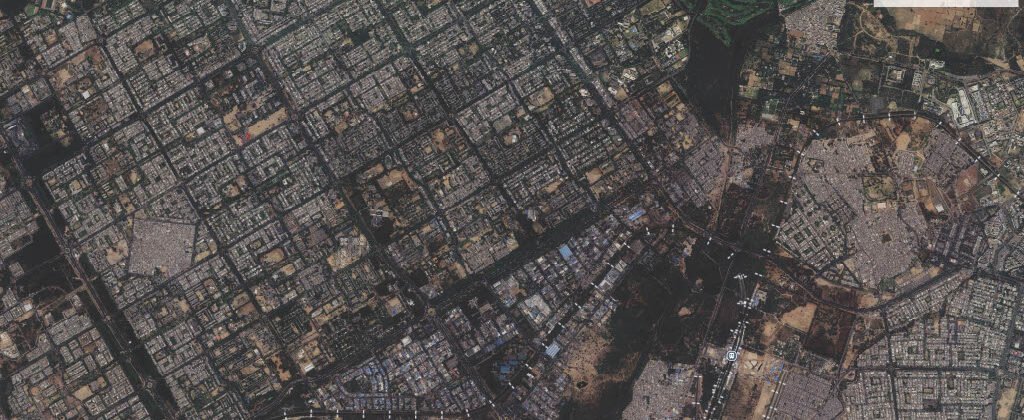
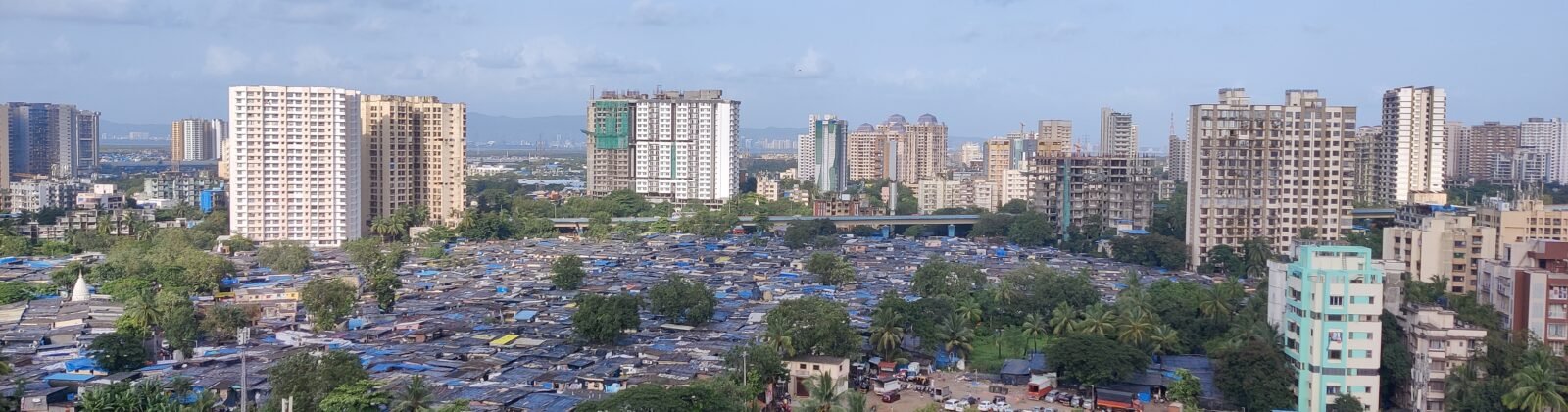
Our paper, Coping and Emotional Trajectories in an Unequal City: Gendered Insights from the Pandemic in Mumbai, examined the layered and uneven experiences of the pandemic through the lens of gender, emotion, and space. Using a qualitative and reflexive approach, we drew on personal narratives and community-level practices from Mumbai’s M Ward- a microcosm of extreme inequality, spanning dense informal settlements and affluent residential areas.
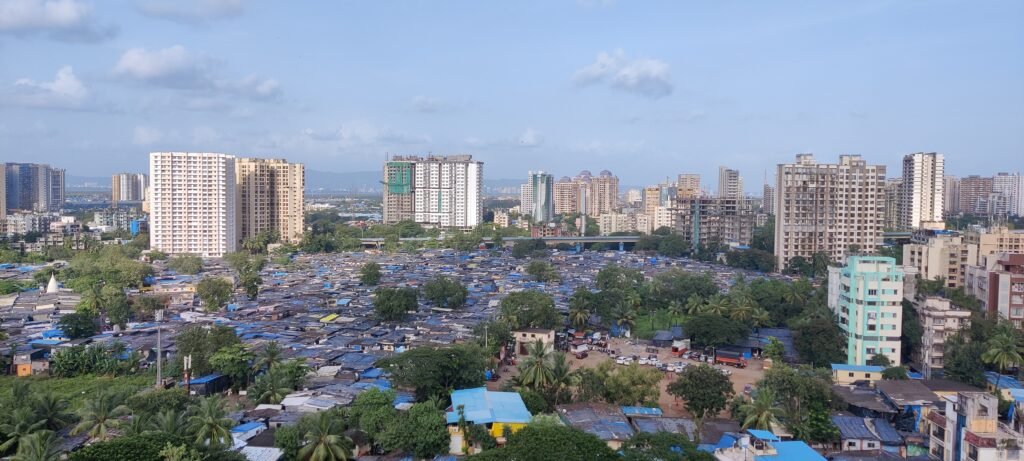
Picture Credits: Richa Bhardwaj, July 2022
The presentation explored how class and gender shaped people’s interpretations of the crisis, their coping strategies, and the forms of individual and collective care that emerged. We discussed examples of community kitchens, hyper-local health efforts, and how notions of dignity and estrangement surfaced in people’s everyday lives. The session also engaged with how systemic exclusions shaped access to relief and response, offering insights into building more inclusive, empathetic urban policies in future crises.
The paper was well-received during an in-person panel that brought together global scholars studying urban vulnerability and resilience. It was both a personally meaningful and professionally enriching experience to share grounded reflections from Mumbai with an international academic audience.
Panchkula Urban Dialogue
Virtual (Zoom) | 29th January, 2022
Role: Invited Panelist & Presenter (Session: Panchkula for All – Strengthening Inclusion and Accessibility in the City)
Presentation Title: Reorienting and Expanding Participation in Planning Processes: Prioritizing the local(s) in metropolitan development
In January 2022, I was invited to speak at the Panchkula Urban Dialogue, a two-day virtual convening co-organized by Haryana Shehri Vikas Pradhikaran (HSVP)- the Urban Development Department of Haryana, Pinaca, and Ashoka University. The dialogue brought together urban practitioners, state officials, and academics to shape a vision for the newly announced Panchkula Metropolitan Development Authority.
As part of the session “Panchkula for All: Strengthening Inclusion and Accessibility in the City”, I delivered a solo presentation drawing on my research and field practice in urban planning and governance, representing the Centre for Urban Policy and Governance at the Tata Institute of Social Sciences (TISS), Mumbai.
My talk explored how inclusion in metropolitan planning must begin at the local scale by actively engaging those most often left out of decision-making processes. I argued for reimagining participation beyond token consultations and instead rooting planning in the lived experiences of residents, especially those in informal settlements and peri-urban areas.
Challenging the technocratic and often exclusionary nature of planning frameworks, I called for a more democratic, decentralized approach: one that recognizes the knowledge held by communities, integrates multilingual and accessible formats for public dialogue, and treats participation as a continuous and structured process rather than a symbolic gesture.
The presentation aimed to provoke reflection on how cities like Panchkula can navigate the tensions between speculative development and public interest, ensuring that urban expansion doesn’t come at the cost of marginalizing those who already live at the edges-physically and socio-economically, of our cities.
To view the full video of this Zoom session, Click Here
Book Talk: The Dharavi Model – How Asia’s Largest Slum Defeated COVID-19
Virtual (Zoon) | 16th December 2021
Role: Invited Discussant
In December 2021, I was invited to serve as a discussant for a virtual book talk hosted by Susinfra, University of Manchester. The session centered around The Dharavi Model, authored by Mr. Kiran Dighavkar, Assistant Commissioner at the Municipal Corporation of Greater Mumbai. The book recounts his frontline experience managing the COVID-19 response in Dharavi-one of the densest urban settlements in the world.
Following a presentation by the author that detailed the motivations behind the book, the crisis management strategies, and on-ground challenges, I engaged the discussion with a critical lens on themes of governance, decentralization, and community mobilization. I also raised questions on whether the “Dharavi Model” was replicated in other parts of Mumbai and what insights it offers for future disaster preparedness.
Drawing from my longstanding engagement with urban governance and prior research interactions with Mr. Dighavkar, my comments aimed to bridge practice with academic inquiry. The event was attended primarily by students and faculty from global academic institutions, offering a valuable space for dialogue between practice and scholarship.
RC21 International Conference: In and Beyond the City – Emerging Ontologies, Persistent Challenges and Hopeful Futures
New Delhi, India | 18–21 September 2019
Role: Paper Presenter (Panel 44 – The Utopian Impulse: Of Other (Urban) Futures)
Paper: Utopias/Dystopias at Critical Conjunctures: Reflections on Making of the Development Plan of Mumbai 2014–34
At the 2019 RC21 International Conference held at the India Habitat Centre in New Delhi, I presented a paper exploring the tensions, aspirations, and conflicts that surfaced during the making of Mumbai’s Development Plan (MDP) 2014–34, a moment of significant urban contestation and transformation.
My presentation, part of the panel “The Utopian Impulse: Of Other (Urban) Futures”, examined the plan-making process as a critical conjuncture in the city’s development trajectory, one that drew unprecedented public attention and engagement from a wide range of actors, especially marginalized civil society groups. The paper traced how this once technocratic, administratively-driven exercise evolved into a broader forum for public debate, where multiple and conflicting visions of Mumbai’s urban future came into sharp focus.
Using an analytic lens informed by Gordin, Tilley, and Prakash’s framework on utopias and dystopias, I explored how diverse actors, including planners, civil society, and developers, conceptualized the city’s problems and proposed vastly different solutions. The presentation highlighted how utopian and pragmatic thinking often co-existed within these imaginaries, revealing the underlying power structures and “conditions of possibility” for more inclusive, democratic planning processes in the future.
Workshop: Mumbai’s Development Plan 2014–2034 – Public Discussion on Preliminary Research Findings
Tata Institute of Social Sciences, Mumbai | 23 November 2016
Role: Presenter and Co-organizer
Presentation Title: Polemics of Participation (with Luca Pattaroni, EPFL)
As part of the international collaborative research project Urban Planning and the Heterogeneous City, co-led by the Urban Sociology Laboratory (LaSUR) at École Polytechnique Fédérale de Lausanne (EPFL), Switzerland, and the Centre for Urban Policy and Governance, Tata Institute of Social Sciences (TISS), we organized a focused, invitation-only workshop at the TISS Mumbai campus to share preliminary research findings.
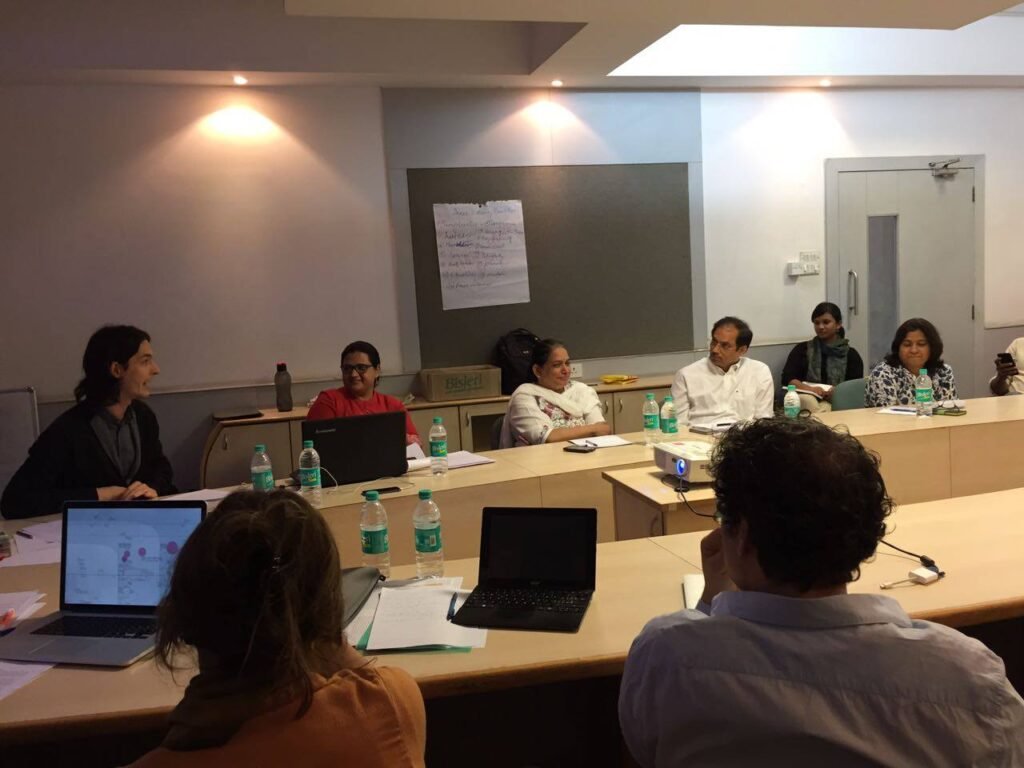
The workshop brought together planners, academics, civil society actors, and students to reflect on the social, technical, and political controversies surrounding Mumbai’s 2014–2034 Development Plan. It served as a critical space to explore the challenges of planning in a heterogeneous and deeply contested urban landscape.
Along with Luca Pattaroni (EPFL), I co-presented our work on the Polemics of Participation, where we unpacked the debates around legitimacy, representation, and knowledge production in the plan-making process. We reflected on the uneven power dynamics embedded in public consultations and the ways in which demands for greater participation pointed to a broader need to reimagine the relationship between the state and urban society.
Our presentation was part of a day-long event featuring multiple thematic discussions from the politics of regulation to the politics of categorization, all anchored in grounded research and stakeholder engagement. The workshop was an important moment of collaborative reflection on urban planning as both a technical and political process.
To know more about this research, click here. Read our chapter on the politics of participation, click here.
RC21 International Conference: The Ideal City – Between Myth and Reality
Urbino, Italy | 27–29 August 2015
Role: Paper Presenter
Paper: Assertions of the Urban Poor Towards Inclusion in the Cities of the Global South: Challenging the Spatial Plan in Chandigarh, India
At the RC21 Conference held in Urbino, Italy, I presented a paper that critically examined the role of urban planning in reinforcing exclusion and how marginalized communities contest and reshape this dynamic. Titled Assertions of the Urban Poor Towards Inclusion in the Cities of the Global South, the paper focused on the city of Chandigarh, India, often celebrated as a model of modernist planning.
Through this case, I explored how the spatial plan of Chandigarh has historically marginalized the urban poor by systematically excluding their needs and presence from the city’s formal vision. Drawing on fieldwork and participatory engagement, the paper analyzed how informal settlements and their residents have made collective claims for housing, services, and recognition, thereby challenging the state’s vision of order and ideal urban form.
The presentation interrogated how these bottom-up assertions redefine “the right to the city” and contest normative planning ideals, offering insights into the contradictions between master planning and lived urban realities in the Global South.
Second International Conference on Deepening Democracy through Participatory Local Governance, Local Governments, and Rights-Based Development
Thiruvananthapuram, Kerala | 15–17 May 2015
Role: Paper Presenter
Paper: Exploring Urban Inclusion: Spatial Planning and the Urban Poor in Chandigarh
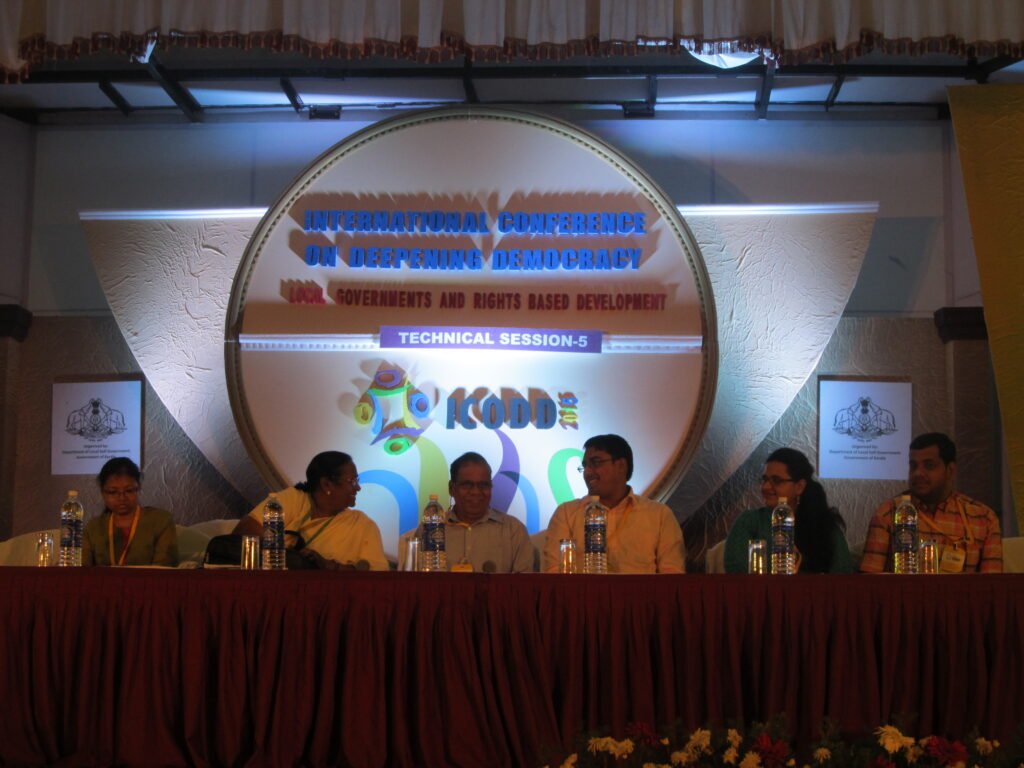
Organized by the Kerala Institute of Local Administration (KILA), this international conference brought together local government officials, academics, students, and administrators to discuss the intersections of participatory governance and rights-based development.
At the conference, I presented a paper examining the deeply contested relationship between spatial planning and urban inclusion in Chandigarh, India’s first planned city and a symbol of post-colonial modernity. The paper questioned dominant models of inclusion that rely on a vertical, State-driven framework, overlooking the agency and political strategies of the urban poor.
Drawing from field research and guided by Henri Lefebvre’s Spatial Triad, I examined the history of informal settlements in Chandigarh and the state’s attempts at relocation and spatial regulation. I highlighted how residents of informal settlements, through negotiation and resistance, asserted their right to space in a city that persistently excludes them from its master plans.
The presentation invited reflections on how urban inclusion must be understood as a dynamic and political interface, shaped not only by top-down policies but also by the actions of marginalized groups who challenge and redefine their place in the city. This discussion was particularly relevant to the conference’s broader themes of participatory democracy and equitable development in urban governance.
Mini- Conference: A Conversation on India’s Efforts to Address Poverty- People and Policy Perspectives
Tata Institute of Social Sciences, Mumbai | December 2012
Role: Invited Presenter
Paper: Migrant Populations in Mumbai Metropolitan Region: Challenges of Access to Shelter
In December 2012, I was invited to present at a student-led learning conference jointly organized by the Tata Institute of Social Sciences (TISS), Mumbai and DePaul University, Chicago. The event brought together master’s and MPhil-level students to exchange perspectives on poverty and development across urban and rural India.
At the time, I had recently begun my MPhil at TISS and was invited to share insights from my field experience leading a project on migrant workers during my tenure at an NGO in Mumbai. My presentation focused on the lived realities of seasonal and semi-permanent migrants in the Mumbai Metropolitan Region, particularly their struggles with securing dignified and stable shelter during their stay in the city.
I challenged rigid classifications of migration by emphasizing the fluid, market-driven nature of mobility in neoliberal urban contexts. Drawing from field observations, I highlighted how skill levels, income disparities, and family structures shaped access to shelter and livelihoods, revealing deep structural vulnerabilities faced by unskilled migrant labourers.
The presentation also explored migration patterns within Maharashtra and beyond, touching upon the systemic rural distress that pushes young workers into cities under precarious conditions. By giving examples from my interactions in the field, I sought to humanize policy discourse and draw attention to the faceless struggles of the countless migrant workers sustaining our cities from the margins.